.png)
Choosing a care home – starting the conversation before crisis
A member’s lived experience.
Choosing a care home for my husband was one of the biggest and most emotional decisions I have faced. Looking back, I would say it is very similar to the stages of grief.
For me, even the phrase “choosing a care home” created a problem before I had begun. I was wrestling with my own anxiety about starting the process at all.
It helped to remember that this decision does not have to be immediate or permanent. It can begin as respite and then be gently extended over time. Sometimes it is easier, and kinder, to approach it this way.
Even with that in mind, I was facing some difficult realities:
Accepting that I could no longer cope with 24-hour care due to exhaustion
Knowing that continuing as we were was causing anxiety for family and friends, who feared a crisis or accident
Being aware of the financial burden of full time care, with no predictable end point
Carrying past experience of poor care, and fearing my partner might be rejected by a “good” home
Coming to terms with the fact that I had not failed, but was overwhelmed by the reality of continuing
Common sense told me I needed to act before a crisis forced my hand. Reaching that point, however, took support.
What helped me move forward:
My son, who calmly encouraged me to explore options early rather than in a rush
A change in case worker, who was able to take some of the emotion out of the situation and reassure me that my husband would be supported
Learning to keep clear financial records, so I could plan ahead and understand when a “Plan B” might be needed
How we approached it
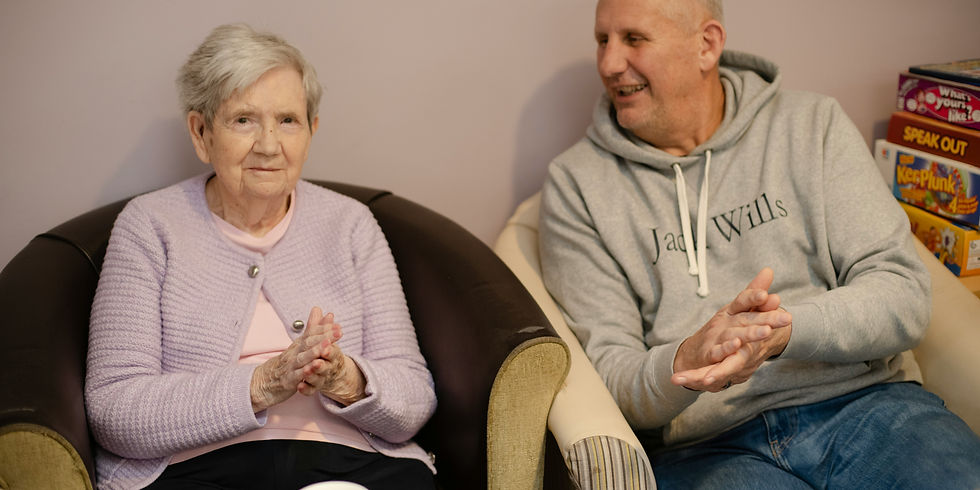
I visited several care homes on my own first, then returned for a second visit with my husband and son before making a decision.
This felt essential. It allowed proper comparison, and visiting unannounced gave us a more honest sense of the home.
We visited three homes twice before choosing. You should always be able to visit as many times as needed, contact the manager with questions, and ask other family members to visit.
At that point, I realised something important. The care home is often in the stronger position, as they dictate availability, admission dates, and terms.
While we were negotiating admission, a hospital stay brought everything into sharp focus. The situation crystallised, and necessity led to direct discharge into the chosen home. In the end, this resolved much of the uncertainty.
Before you start
It can help to ask yourself:
Is anything holding me back from addressing this in advance?
Would impartial advice help by removing some of the emotion?
Are my finances up to date, and do I understand what support might be available?
A note on the process
During the selection process, you will usually deal with a customer care or relationship manager, or the head of the home.
They are skilled at giving general answers, but can provide more tailored responses once they understand your situation. The more specific you are, the more useful the information will be.
The questions we wish we had asked
1. Will this home still work if needs change?
It is easy to focus on current needs, but dementia is progressive.
Ask specific questions about dementia care, nursing provision, and end of life care. Do not rely on general reassurance that things will be managed. If the home cannot meet future needs, you may have to move again.
It can help to look at independent reviews such as carehome.co.uk or Lottie.
2. Can we see and shape the care plan?
Information should be a two way process.
If you are asked to provide background information, make sure it is reflected in the care plan. Do not assume it will be.
Care plans should be accessible, even in a shortened daily format
This becomes especially important at end of life, when detailed records may be reviewed regularly
Also ask:
Who conducts reviews?
Who can attend?
Will time be set aside for proper discussion in a quiet space?
3. Who will actually provide the care?
Speak to the head of floor, as they are your main day to day contact
Ask about staff to resident ratios
Ask how often agency staff are used
Ask about training and staff development
For medical care:
Does a GP visit the home, or do residents travel?
Is it the same GP each time?
Are medical records actively reviewed?
Care homes can access GP summaries with consent, but it is still worth checking.
4. What does a typical day really look like?
Is personal care carried out consistently?
Are carers assigned to specific residents?
Where do activities take place?
Are residents encouraged to move freely if they are able?
Is there a structured programme across the day?
Also ask yourself:Is this routine what you would want, or what is realistic and sustainable?
5. Do people get out into the community?
How often are outdoor spaces used?
Is transport available for individual outings as well as organised trips?
Can residents attend activities outside the home?
6. What is the food and atmosphere really like?
Are seating arrangements considered?
Is hygiene managed well after meals?
Are residents supported to eat at their own pace?
If possible, book a meal and experience it yourself.
7. How easy is it to raise concerns?
Is there a clear complaints procedure?
Is senior management available at weekends and holidays?
Are family meetings held regularly, and are actions followed through?
8. What does good care feel like here?
Do staff and management know residents by name?
9. The things you feel as much as see
Ask yourself:
Does the building feel light and welcoming, or institutional?
Are there any unpleasant odours?
Does the design support residents’ needs?
Are shared spaces inviting and used?
Is the atmosphere open and warm?
Is entry secure but easy to use?
Is parking practical for regular visits?
Where is the nursing station, and does it feel connected to daily life?
A final reflection
In an ideal world, this would be a decision made calmly, together, with time and choice.
In reality, it is often avoided until a crisis forces action, and decisions are made under pressure, without fully understanding the options.
If there is one thing I would say, it is this:
Starting the conversation early does not make it happen sooner. It simply gives you more control, more choice, and more peace of mind when the time comes.


